




How to Choose the Right Golf Bag
That golf bag can look perfect online and still annoy you by the third hole.
Maybe it tips over on the range. Maybe the pockets are in the wrong place on a cart. Maybe it feels light in the shop but heavy once you load it with balls, a rain jacket, and the dozen little things that somehow end up coming along for every round. If you're figuring out how to choose a golf bag, the smartest move is to start with how you actually play, not with the color, the logo, or how many pockets it has.
How to choose a golf bag for the way you play
Most golfers don't need the "best" bag. They need the right bag for their routine.
If you usually walk nine after work, a lightweight stand bag makes a lot of sense. If you ride every weekend and like everything neatly organized, a cart bag is usually the better fit. If you're the type who wants the lightest possible setup and carries just the basics, a Sunday bag can be a great call. And if you split your time between walking and riding, that's where the decision gets a little more personal.
A lot of buying mistakes happen because golfers shop aspirationally. They buy for the version of themselves who walks 36 holes, travels for buddy trips, and practices three times a week. But if your real routine is a cart on Saturday and the occasional range session, buy for that. You'll be happier every time you use it.
Start with the bag style
Stand bags
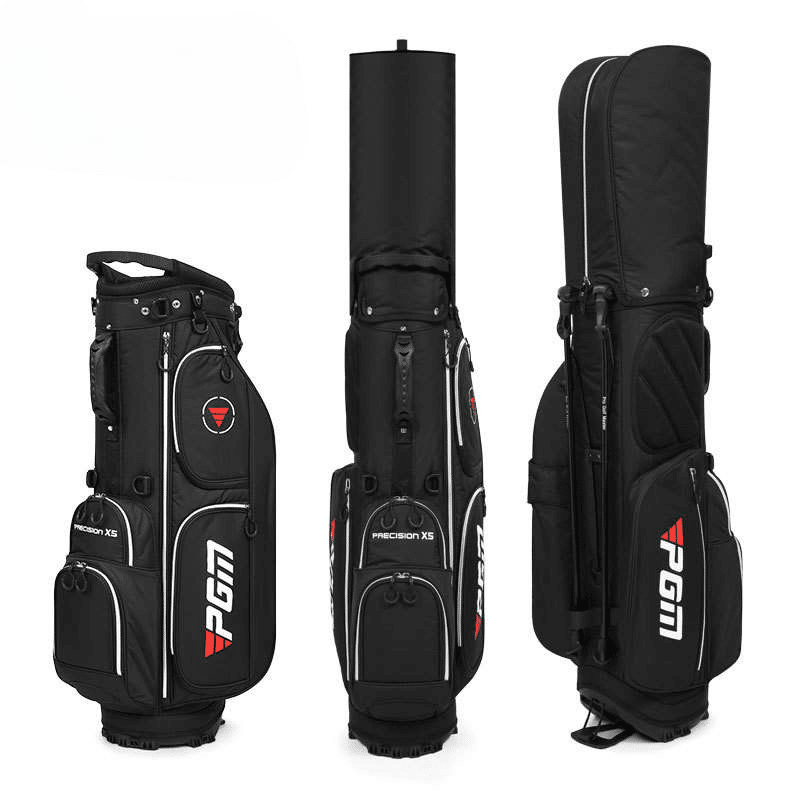
Stand bags are the most versatile option for a lot of players. They work well if you walk, practice often, or just want a bag that can handle different situations without feeling bulky. The built-in legs are useful on the range and around the course, and most modern stand bags are light enough to carry comfortably for a full round.
The trade-off is storage and cart fit. Some stand bags sit a little awkwardly on riding carts or push carts, especially if the pockets are blocked once the bag is strapped in. If you tend to bring extra layers, snacks, rain gear, and accessories, a smaller stand bag can start to feel cramped.
Cart bags
Cart bags are built for organization and convenience. They usually offer more pockets, more top dividers, and easier club separation. If you ride most of the time, this style often feels cleaner and less frustrating. Everything has a place, and you don't have to dig through a crowded side pocket for a glove or rangefinder.
The downside is weight and portability. Even before you fill them, cart bags tend to be heavier and bulkier. You can carry one from the car to the cart, of course, but you probably won't enjoy carrying it any farther than that.
Carry and Sunday bags
These are best for golfers who want to keep things simple. They're light, easy to move, and great for quick rounds, par-3 courses, and range sessions. They can also be a good option for juniors or newer players who don't carry a full setup.
The obvious trade-off is space. If you like being prepared for every weather change and every possible on-course need, a minimalist bag may test your patience.
Weight matters more than people think
A golf bag's listed weight is only the starting point. Once you add clubs, balls, tees, water, a towel, sunscreen, and a pullover, even a "light" bag can stop feeling light.
If you walk regularly, pay close attention to this. A bag that's one or two pounds heavier may not sound like much at checkout, but it feels different by the back nine. Good straps help, but they don't cancel out extra weight.
If you almost always ride, weight becomes less important than access and storage. In that case, it can be worth accepting a heavier bag if it gives you a better layout and less hassle.
Think about club dividers and top layout
This is where preference really kicks in.
Some golfers like a simple 4-way top because it's lighter and easy to manage. Others want a 14-way divider so every club has its own slot. Neither is automatically better. It depends on how organized you like your setup and how much club crowding bothers you.
A 14-way top can keep things tidy and reduce grip tangling, which is especially helpful on a cart. But it can also add weight and make the bag feel more structured than some players want. A 4-way or 5-way top is often plenty for walkers who want lighter carry and don't mind a little contact between clubs.
If you use oversized grips, check this carefully. Tight dividers that look fine in photos can feel crowded once the clubs are actually in the bag.
Pockets should match your habits
More pockets do not always mean a better bag.
If you're always carrying extra layers, valuables, drinks, and accessories, pocket space matters. Look for a bag with a full-length apparel pocket, a lined valuables pocket, and storage that stays accessible when the bag is strapped onto a cart. A cooler pocket can be nice, but only if you'll actually use it.
If you travel light, too many compartments can become clutter. You end up forgetting where you put things or carrying more than you need just because the bag allows it. For plenty of golfers, a cleaner setup is the better one.
One small detail worth noticing is pocket placement. On some bags, the biggest pocket sits exactly where a cart strap goes. That gets old fast. If you ride often, a cart-friendly layout is more valuable than one extra zipper.
How to choose a golf bag that works with your cart
This part gets overlooked all the time.
If you use a riding cart or push cart most rounds, make sure the bag is designed to sit securely and let you reach the pockets you use most. Cart bags usually do this best, but some hybrid and stand bags are built well enough to handle both.
Look at the base shape, strap channel, and front-facing pocket design. A bag can be excellent for carrying and still be awkward once it's locked onto a cart. If your scorecard pocket, rangefinder pocket, or ball pocket gets blocked every round, that's not a small issue. That's a bad fit.
For golfers who split time between walking and riding, hybrid stand bags are often the sweet spot. You give up a little storage compared to a true cart bag, but you gain flexibility.
Weather, durability, and materials
Golf bags take more abuse than people expect. They get dragged in and out of trunks, leaned on paths, strapped to carts, and left in damp conditions.
If you play year-round or deal with changeable weather, durable fabric and solid zippers are worth paying for. A bag that looks sharp but starts fraying or sticking after one season isn't a bargain. Water-resistant materials and sealed pockets can also be useful, especially if you don't always get the luxury of perfect conditions.
That said, don't overbuy here either. Not everyone needs a tour-level, heavily structured bag with every weather feature built in. If your rounds are casual and your gear stays pretty protected, standard durability may be more than enough.
Don’t ignore comfort
If you're carrying, comfort is not a bonus feature. It's the feature.
Check the strap system, balance, and handle placement. A good dual-strap setup should feel stable without constant adjusting. The bag should sit well on your back and not pull awkwardly to one side. Grab handles at the top and middle also make a difference when you're lifting the bag in and out of a car.
This is one of those areas where specs don't tell the whole story. Two bags can weigh almost the same, but one feels noticeably easier to live with because the design is better.
Style matters, just not first
Let's be honest. You want your bag to look good.
That's fair. A golf bag is one of the most visible pieces of gear you own, and if you're spending good money, you should like the way it looks. But style should be the final filter, not the first one. Pick the type, weight, layout, and storage that fit your game, then choose the colorway you like best.
That's usually how you avoid buyer's remorse.
A simple way to make the decision
If you're stuck between two options, ask yourself three questions. Do I walk or ride more often? How much gear do I really carry? What has annoyed me about my current bag?
Those answers usually point you in the right direction faster than any feature chart.
For many golfers, the right call is a practical one - a stand bag for flexibility, a cart bag for organization, or a minimalist carry bag for easy rounds. If you need one fast and want to shop local, Make de Run keeps golf gear close to home so you're not waiting weeks to fix a problem you noticed this weekend.
The best golf bag is the one you stop thinking about once the round starts.


